Silent Space, a sound masking technology
to limit obtrusive noise in open plan work space.
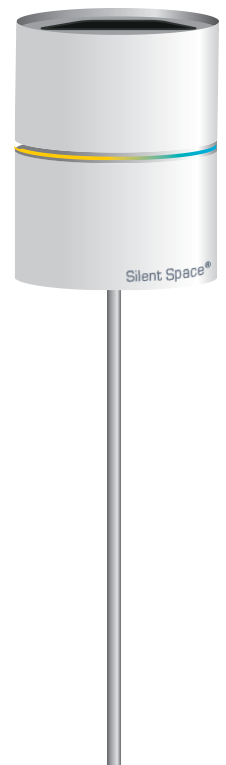
Sound masking created by Silent Space® is based on the homogeneous diffusion of a neutral and soft sound akin to a “pink noise”.

Thanks to its technology, this sound which masks surrounding noise cannot itself be identified, while reducing the signal of voices to the same level as the surrounding noise. The result is a significant reduction of the zone where human voice can be understood, also called distraction radius. Distant conversations become less comprehensible as noise peaks do not reach human ears so directly.

How is it explained ?

schema2

Co-workers naturally get used to the adjusted signal presence and do not perceive it anymore after a few minutes.
A virtual cocoon is created around each co-worker, who automatically adapts his/her behaviour due to being surrounded by the signal, which results in the feeling of a more private work space.
Sound masking naturally fits into the creation of an optimal acoustic environment.

The technology of sound masking is already present in almost 20% of North American shared offices.

Le masquage sonore repose sur la diffusion homogène d’un son neutre et doux s’apparentant à un « bruit rose ».

Ce son masquant possède des propriétés physiques lui permettant notamment d’être non identifiable tout en réduisant le rapport du signal de la parole sur le bruit ambiant. Le résultat, une réduction de la zone où la parole humaine est intelligible que l’on appelle le rayon de distraction. Les paroles distantes sont alors moins compréhensibles et les pics de bruit ne parviennent plus à l’oreille humaine de manière aussi frontale.

Comment cela se traduit-il ?

Les opérateurs s’habituent naturellement à la présence de ce signal ajusté et finissent pas ne plus le percevoir au bout de quelques minutes. Dès lors, un cloisonnement virtuel est créé autour de chaque opérateur. Enveloppé par ce signal, celui-ci retrouve un espace de travail plus intimiste et tend à modifier naturellement son comportement.

Aujourd’hui, près de 20% des bureaux partagés des pays anglo-saxons en sont équipés.

x

Quote request form

  • (priority elements that have to appear: Offices lay-out, the openings and passing flows)
  • :
Silent Space, a sound masking technology
to limit obtrusive noise in open plan work space.

Sound masking created by Silent Space® is based on the homogeneous diffusion of a neutral and soft sound akin to a “pink noise”.

Thanks to its technology, this sound which masks surrounding noise cannot itself be identified, while reducing the signal of voices to the same level as the surrounding noise. The result is a significant reduction of the zone where human voice can be understood, also called distraction radius. Distant conversations become less comprehensible as noise peaks do not reach human ears so directly.

How is it explained ?

schema2

Co-workers naturally get used to the adjusted signal presence and do not perceive it anymore after a few minutes.
A virtual cocoon is created around each co-worker, who automatically adapts his/her behaviour due to being surrounded by the signal, which results in the feeling of a more private work space.
Sound masking naturally fits into the creation of an optimal acoustic environment.

The technology of sound masking is already present in almost 20% of North American shared offices.

Le masquage sonore repose sur la diffusion homogène d’un son neutre et doux s’apparentant à un « bruit rose ».

Ce son masquant possède des propriétés physiques lui permettant notamment d’être non identifiable tout en réduisant le rapport du signal de la parole sur le bruit ambiant. Le résultat, une réduction de la zone où la parole humaine est intelligible que l’on appelle le rayon de distraction. Les paroles distantes sont alors moins compréhensibles et les pics de bruit ne parviennent plus à l’oreille humaine de manière aussi frontale.

Comment cela se traduit-il ?

Les opérateurs s’habituent naturellement à la présence de ce signal ajusté et finissent pas ne plus le percevoir au bout de quelques minutes. Dès lors, un cloisonnement virtuel est créé autour de chaque opérateur. Enveloppé par ce signal, celui-ci retrouve un espace de travail plus intimiste et tend à modifier naturellement son comportement.

Aujourd’hui, près de 20% des bureaux partagés des pays anglo-saxons en sont équipés.

x

Quote request form

  • (priority elements that have to appear: Offices lay-out, the openings and passing flows)
  • :